

Nick Carroll
I've spent 30 years building legal publishing infrastructure. I founded publish.law to help attorneys turn their cases, insights, and credentials into a digital presence they own, built for how clients, referral sources, and AI systems find lawyers today.
Notes
-
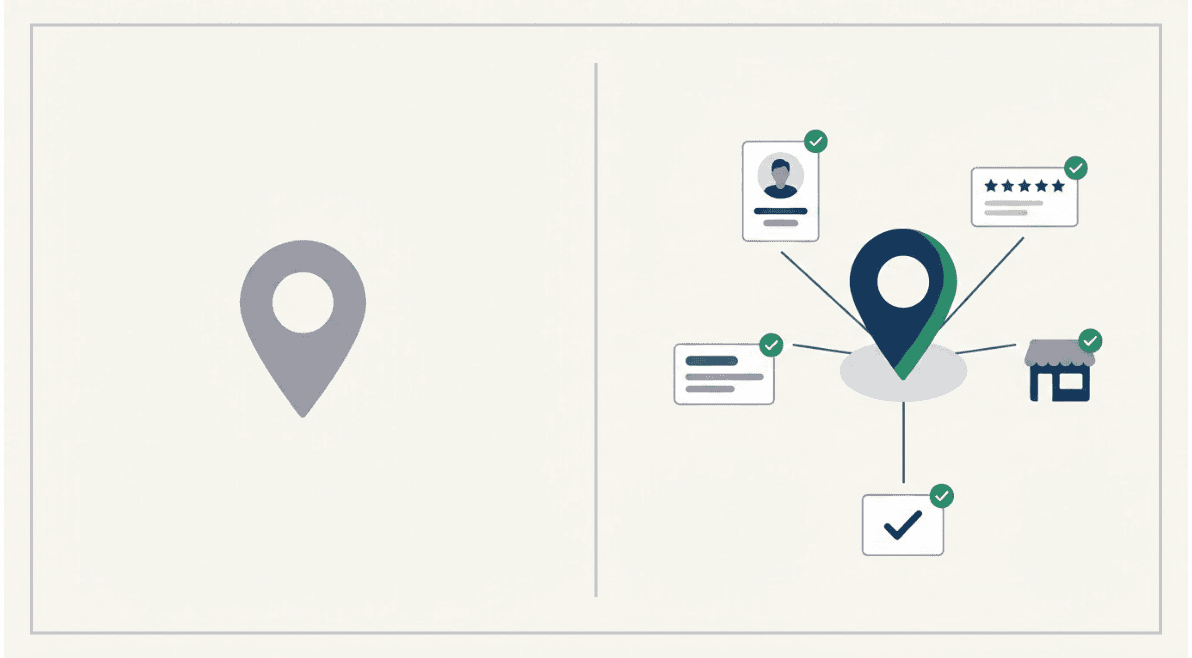
AI search tools don't look at your zip code. They look at your bar profile, your reviews, and whether your published results match the places you say you practice. If those signals are thin or inconsistent, you don't show up, even locally. Worth reading carefully if you want AI answers to name you when someone nearby is searching for what you do.
-
40% of AI citations drop the brand name entirely and just reference the content. If your writing lives only on a firm site, you may be getting cited without your name attached. Publishing under your own name, with your own profile clearly connected, is how you make sure the credit lands on you.
-
Personal posts, bylines, and social content are increasingly what AI systems pull from when building answers, so your name showing up in more places isn't vanity, it's how citations happen.
-
ChatGPT now pulls Yelp reviews directly into answers about local businesses, and that includes law firms. If someone asks ChatGPT for a lawyer in your city, your Yelp rating may show up in the reply. Your reviews are now part of how AI describes you, not just how Google ranks you locally.
-
Semrush dug into what actually gets a brand cited repeatedly by ChatGPT, and traditional SEO rankings barely correlate. What does: getting mentioned across many independent sources. For you, that means your name showing up in bar association profiles, published articles, podcast appearances, and colleagues' sites matters more than one well-optimized page.
-
If your site runs Cloudflare challenges or any bot-detection overlay, Google may see a different page than your visitors do. John Mueller flagged that this can cause canonicalization problems and get your pages quietly deindexed. Check whether Googlebot can actually see your content, not just a verification screen.
-
Voice and AI assistants answer in full sentences pulled from structured, conversational content. If your practice-area pages are written for keyword density instead of real questions, you're likely invisible in those results. The fix is less about technical SEO and more about writing like a person answering a specific question.
-
We’ve introduced Notes for Legal Examiner affiliates—a simple way to share timely updates and insights. See an example from the Atlanta Legal Examiner:
-
Old posts don't just fade quietly. They can actively drag your site's credibility down if they've gone stale, contradictory, or thin compared to what's out there now. This breaks the problem into four distinct types with specific fixes for each.
-

 Marler Clark Investigates Nationwide Cyclospora Outbreak as U.S. Cases Near 7,000The national food safety firm has been contacted by people sickened in 2026 and is investigating their links to restaurant and produce exposures as the
 Food Poison Journal
 This is basically a perfect post from Marler Clark. AI assistants picking up just this have now associated the firm and Bill directly to legal issues regarding Cyclospora.








Subscribe to Nick Carroll
Get new posts delivered to your inbox.